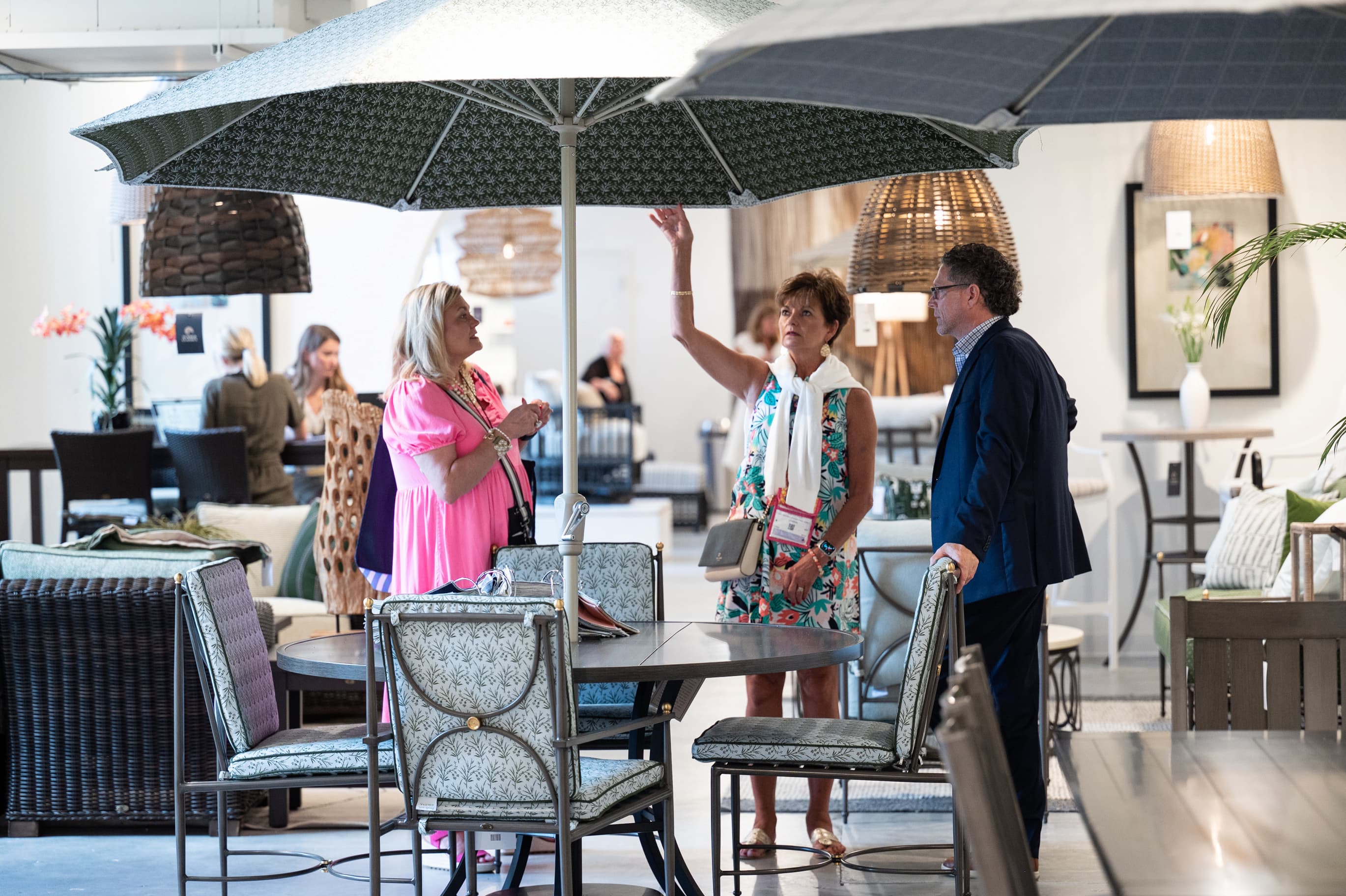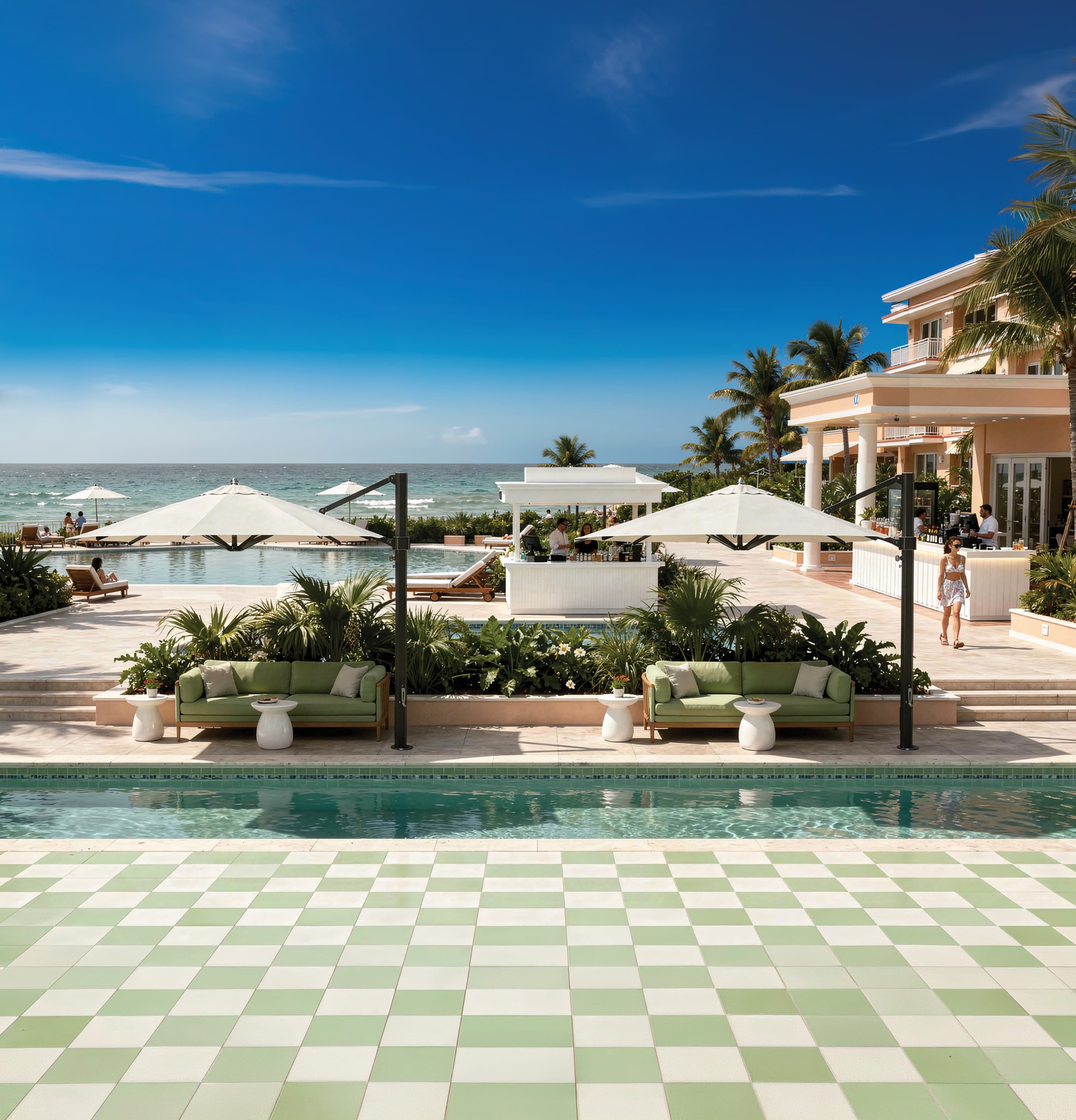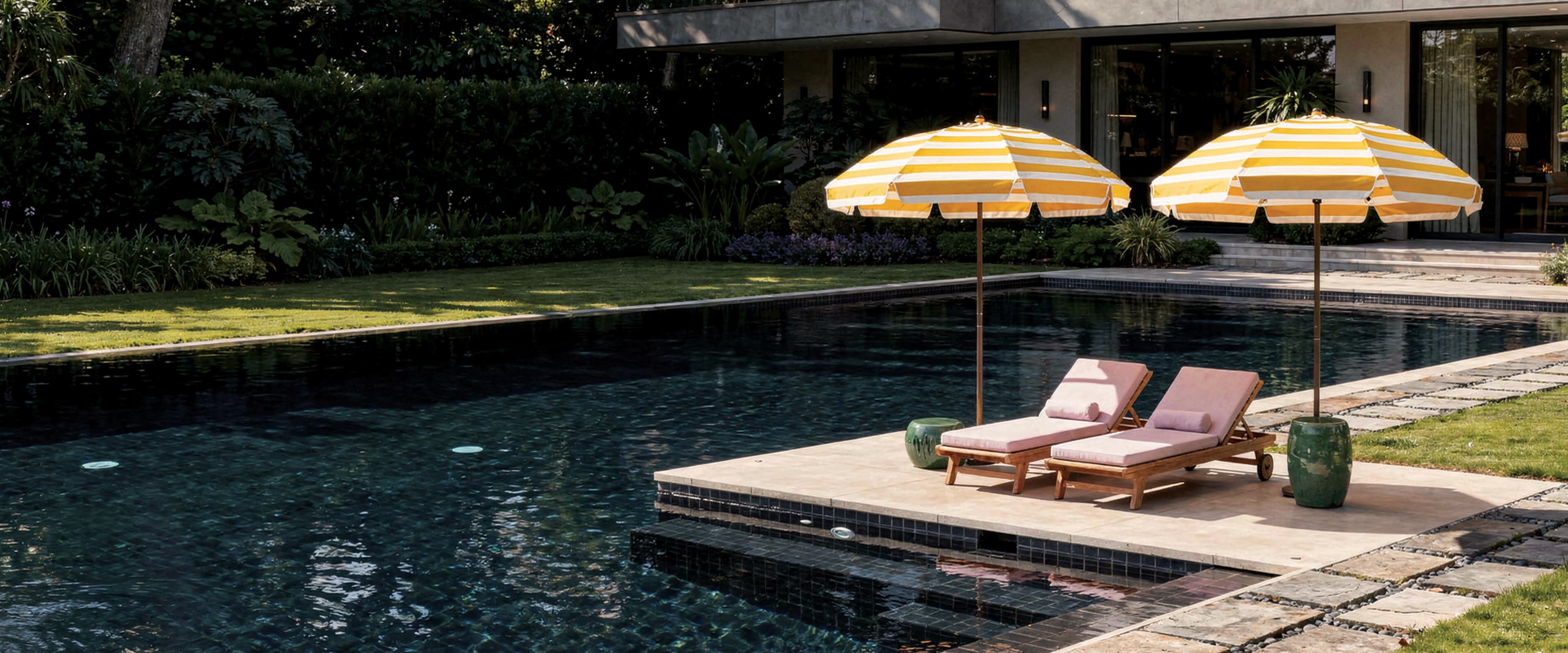
In many outdoor projects, umbrellas enter the conversation later in the process: once the furniture is selected, the layout is defined, and the overall vision is coming into focus.
But the right umbrella does more than fill a gap. It shapes how a space looks, feels, and functions. It often becomes one of the most visible and heavily used elements in the entire design.
A strong specification is less about “checking a box” and more about achieving a sacred balance, where performance, aesthetics, and integration into the broader environment sing together.
Environment First. Then Product.
Every successful specification begins with context.
Before selecting finishes, it’s worth stepping back and considering the conditions the umbrella will need to perform in:
- Wind exposure
- Sun intensity and direction
- Proximity to water (coastal environments, pools, humidity)
- Frequency and type of use
The same umbrella that works beautifully in a residential backyard may struggle in a beachfront hospitality setting. Designing with the environment in mind ensures the solution holds up—not just visually, but structurally—over time.
Performance Requirements That Actually Matter
A well-specified umbrella performs consistently, not just on install day, but season after season. A few key factors make that possible:
Wind Resistance & Structural Integrity
Frame construction plays a critical role in long-term performance. Materials like aluminum and fiberglass are designed to flex under pressure, helping the umbrella withstand wind and repeated use without compromising stability.
Fabric Performance
Fabric choice is bigger than color selection. It impacts comfort, longevity, and overall experience. Higher-grade materials provide stronger UV protection, resist fading, and maintain their appearance over time, even in high-exposure environments.
Longevity & Maintenance
In real-world settings, wear is inevitable. The question is how the product responds to it. Umbrellas designed with replaceable parts and serviceable components allow for maintenance and repair, so you don’t need to replace the entire product.
A thoughtful specification anticipates these realities upfront.
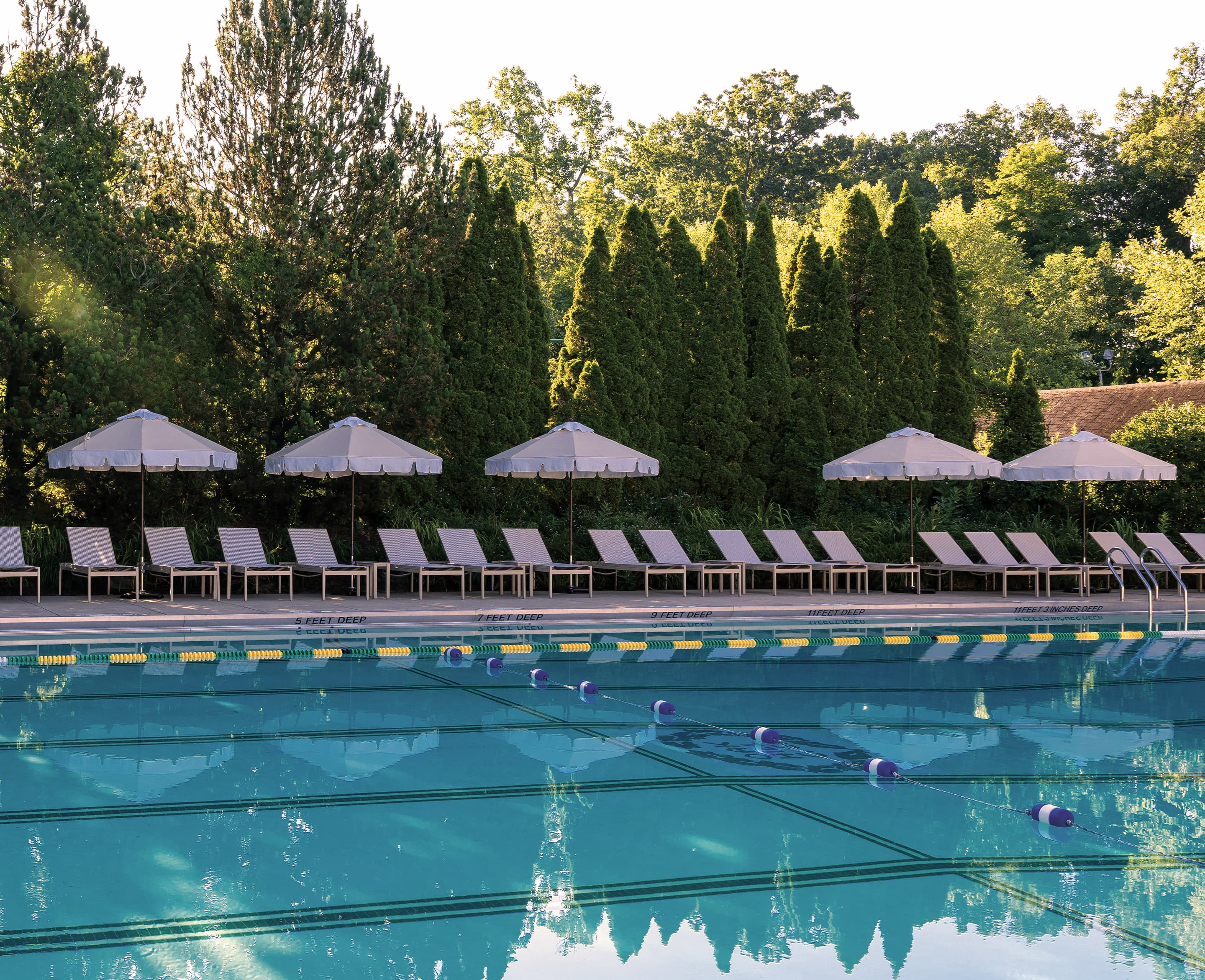
Designing with the Umbrella, Not Around It
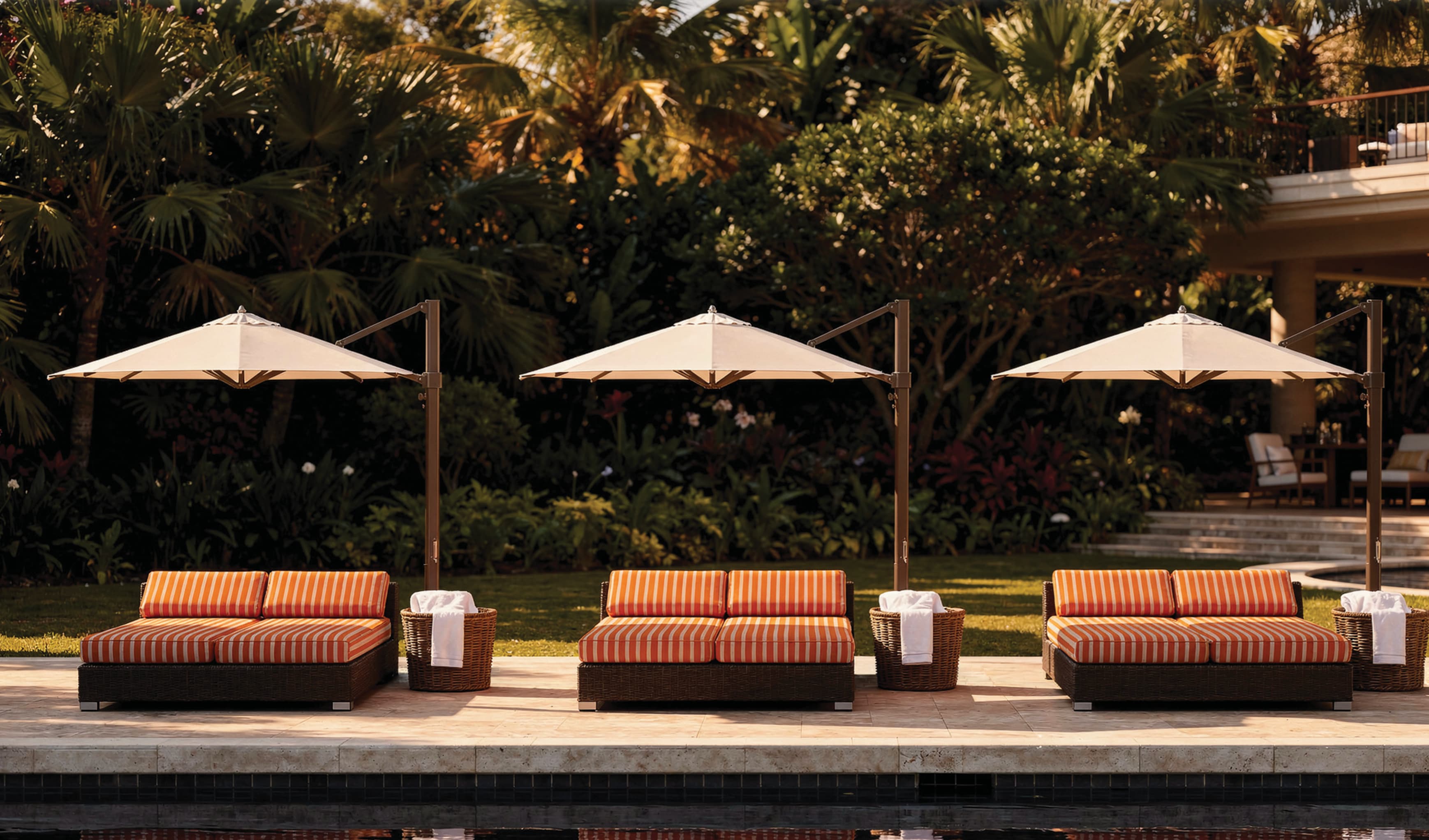
Umbrellas have a unique role in outdoor spaces. They’re functional, but they’re also highly visible, usually sitting at eye level and anchoring the overall composition.
When treated intentionally, they can help define:
- Spatial rhythm across a patio or pool deck
- Sightlines and visual balance
- Zones for dining, lounging, or circulation
Scale and proportion matter here. Undersized umbrellas can feel incidental, while appropriately scaled or oversized options create a stronger, more deliberate presence.
In many cases, the umbrella becomes one of the most defining elements of the space.
Customization as a Design Tool
Customization opens up additional opportunities to align umbrellas with the broader design vision.
Options like fabric selection, color matching, valances, and edge detailing allow designers to:
- Reinforce a brand identity in hospitality settings
- Coordinate with furniture, finishes, and architectural elements
- Introduce contrast or cohesion depending on the desired effect
Custom patio umbrellas can both enhance the aesthetics of a space as well as extend the design language across the entire environment.
Integration with Furniture, Bases, and Layout
Even the best umbrella can fall short if it isn’t properly integrated into the space.
Base selection is a critical, and often underestimated, part of the specification. Considerations include:
- Freestanding vs. mounted bases
- Weight requirements based on size and exposure
- Compatibility with tables and furniture layouts
Equally important is how the umbrella interacts with its surroundings—clearances, walkways, and seating arrangements all influence usability.
A strong specification looks beyond the umbrella itself and considers the full system it operates within.
Common Spec Mistakes (And How to Avoid Them)
Even experienced teams can run into challenges when umbrellas are treated as secondary decisions. A few common pitfalls include:
- Prioritizing aesthetics without fully accounting for performance
- Underspecifying for wind or environmental exposure
- Selecting fabric based on color alone
- Overlooking maintenance and serviceability
- Adding umbrellas late, rather than incorporating them into the initial design
Avoiding these missteps comes down to treating umbrellas as integral elements rather than finishing touches.
A Better Approach to Specifying Outdoor Umbrellas
At its best, specifying outdoor umbrellas is an exercise in balance.
It’s about aligning performance requirements with design intent. Thinking in systems, not just individual products. And creating solutions that hold up as well in year three as they do on day one.
The most successful specifications complete a space, and then elevate it.
Outdoor umbrellas may seem simple at first glance, but their impact is anything but.
Explore customizable, commercial-grade umbrellas designed to integrate seamlessly into your next project with our Shade Designer.