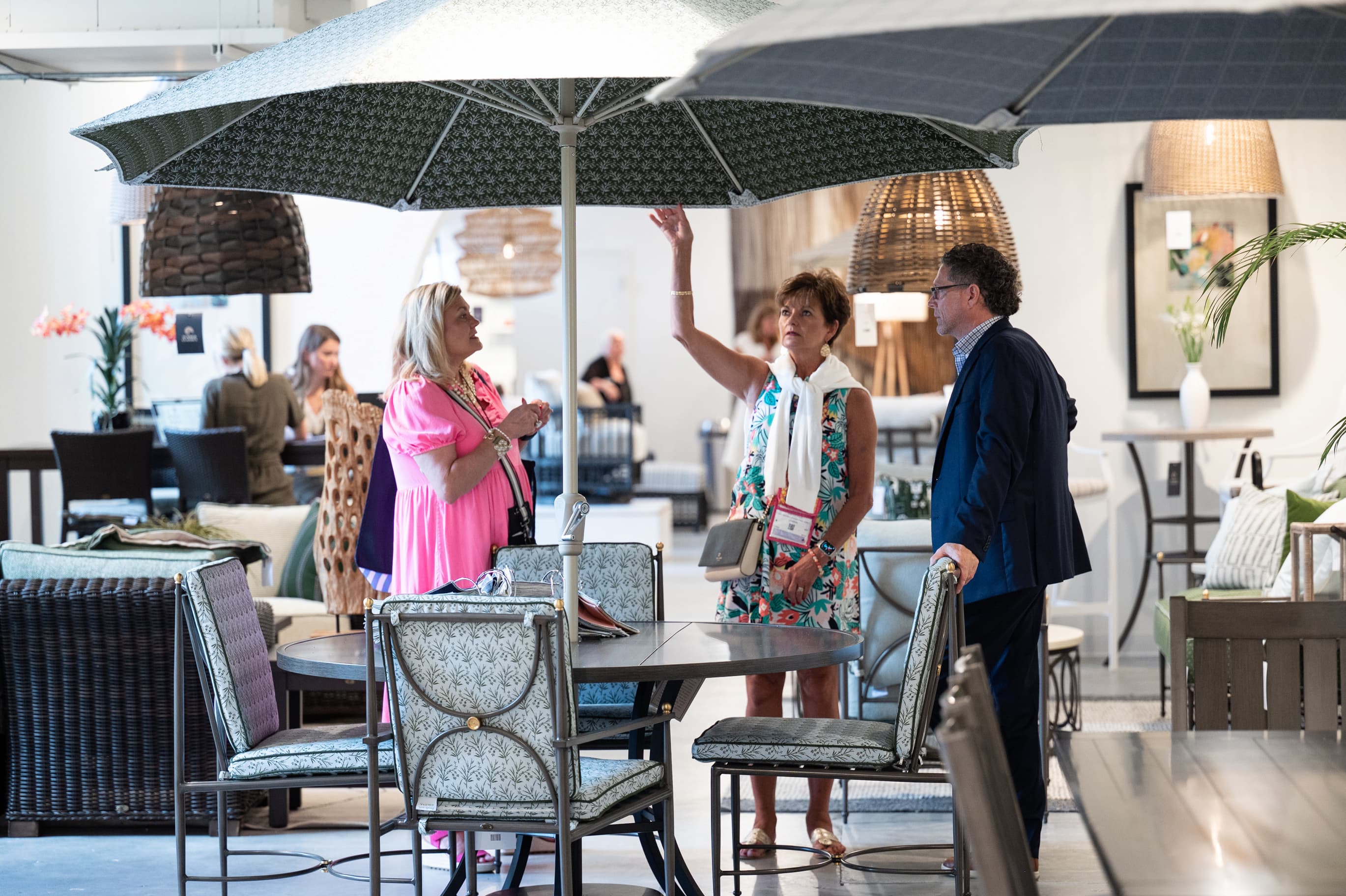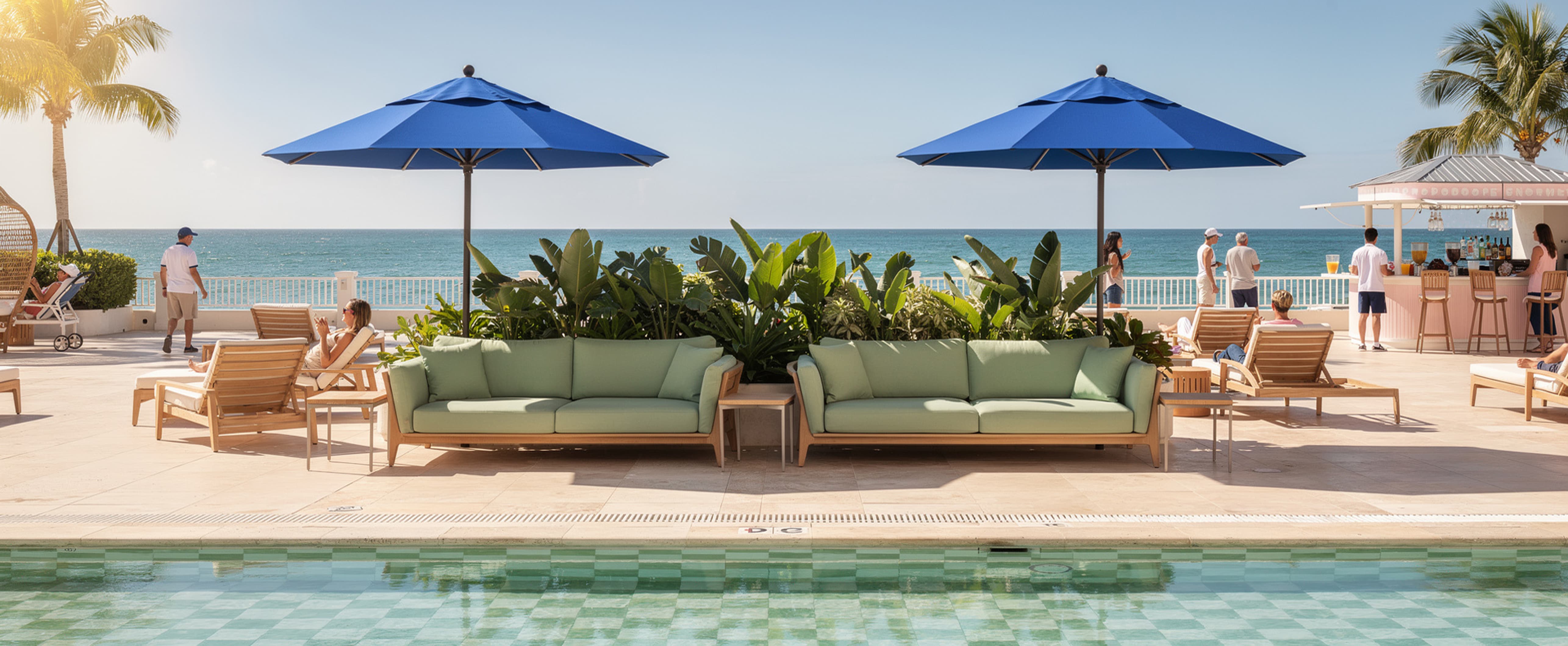
Watch how guests move through an outdoor space.
They don’t start by analyzing the furniture or admiring the layout. They look for where it feels best to sit. Where it’s comfortable. Where it’s shaded. Where it feels just a little more inviting than everywhere else.
And more often than not, that decision is shaped by something simple: the presence—or absence—of shade.
Umbrellas may seem like a functional detail, but they quietly influence how a space is used, how long guests stay, and how the entire environment is perceived.
First Impressions Start Before Guests Sit Down
Before a guest ever takes a seat, they’ve already formed an opinion.
They scan the space quickly, taking in what feels cohesive, what feels intentional, and what feels overlooked. Clean lines, consistent layouts, and well-placed shade all signal the same thing: this space has been thoughtfully designed.
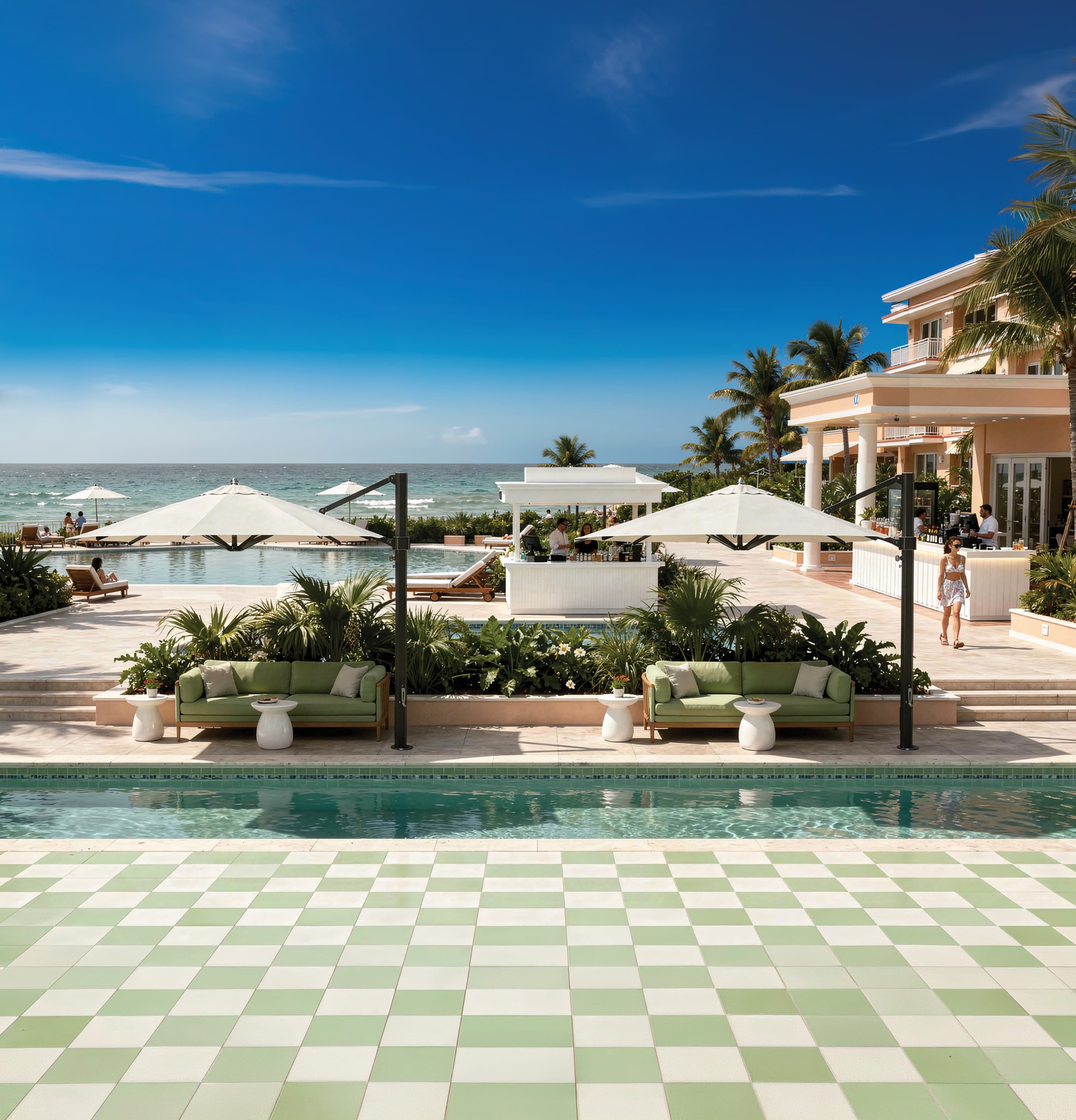
Poolside umbrellas and patio shade solutions play a surprisingly large role in that first impression. When they’re aligned, properly scaled, and consistent throughout the space, they help create a sense of order and quality.
When they’re mismatched, faded, or scattered without intention, they introduce visual noise, subtly undermining everything else around them.
You may not hear guests call it out explicitly. But it shapes how the space feels from the very beginning.
Comfort Drives Behavior (And Time Spent)
Guests naturally gravitate toward comfort.
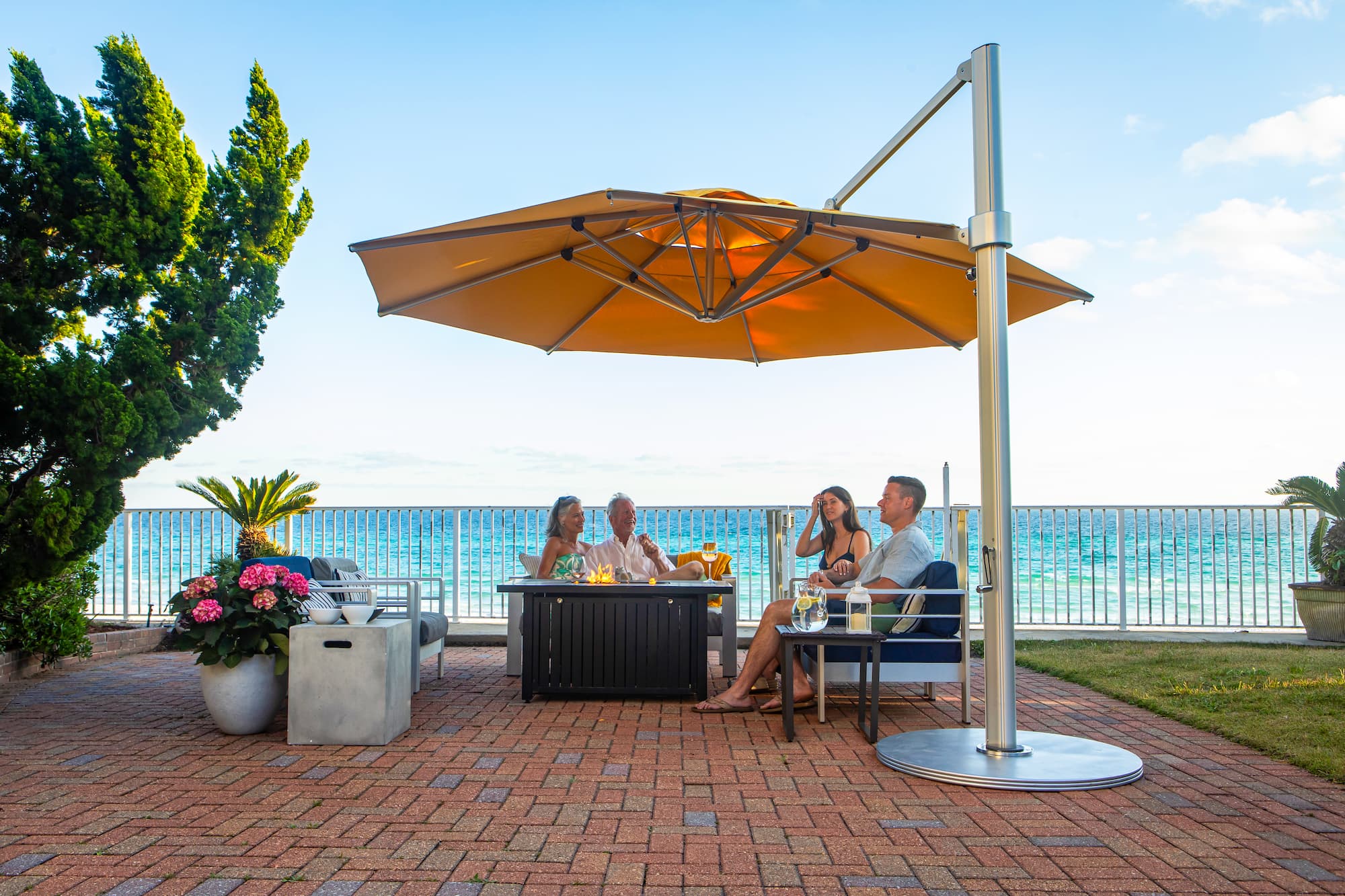
On a sunny day, that means shade. It’s the difference between a space that looks good and a space that actually gets used.
Well-placed umbrellas make outdoor areas more usable throughout the day. They reduce glare, lower perceived temperature, and create pockets of relief that invite people to sit, stay, and settle in.
And when guests are comfortable, they stay longer.
They order another drink. They linger over a meal. They spend more time in the space instead of retreating indoors.
Outdoor comfort for guests directly influences how the space performs.
Shade Creates Structure Without Walls
In open-air environments, structure doesn’t come from walls, it comes from how the space is defined.
Umbrellas play a key role in that.
They help establish zones:
- Dining areas that feel distinct from lounge spaces
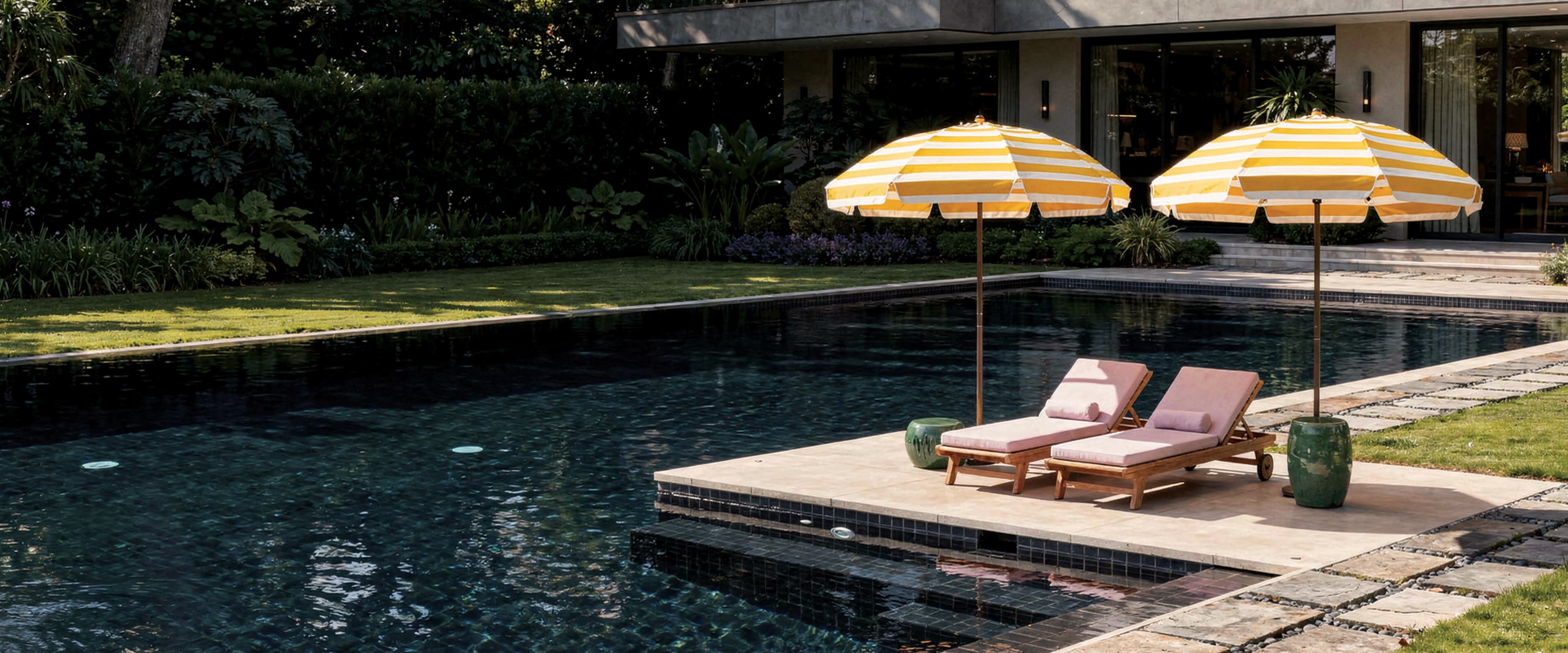
- Poolside seating that feels intentional rather than scattered
- Transitional areas that guide movement without restricting it
Without this kind of structure, outdoor spaces can feel undefined: wide open, but not necessarily inviting.
With it, they feel organized, purposeful, and easy to navigate.
Guests don’t have to think about where to go. The space guides them.
Visual Cohesion Shapes Perception
Consistency is one of the most powerful drivers of perceived quality.
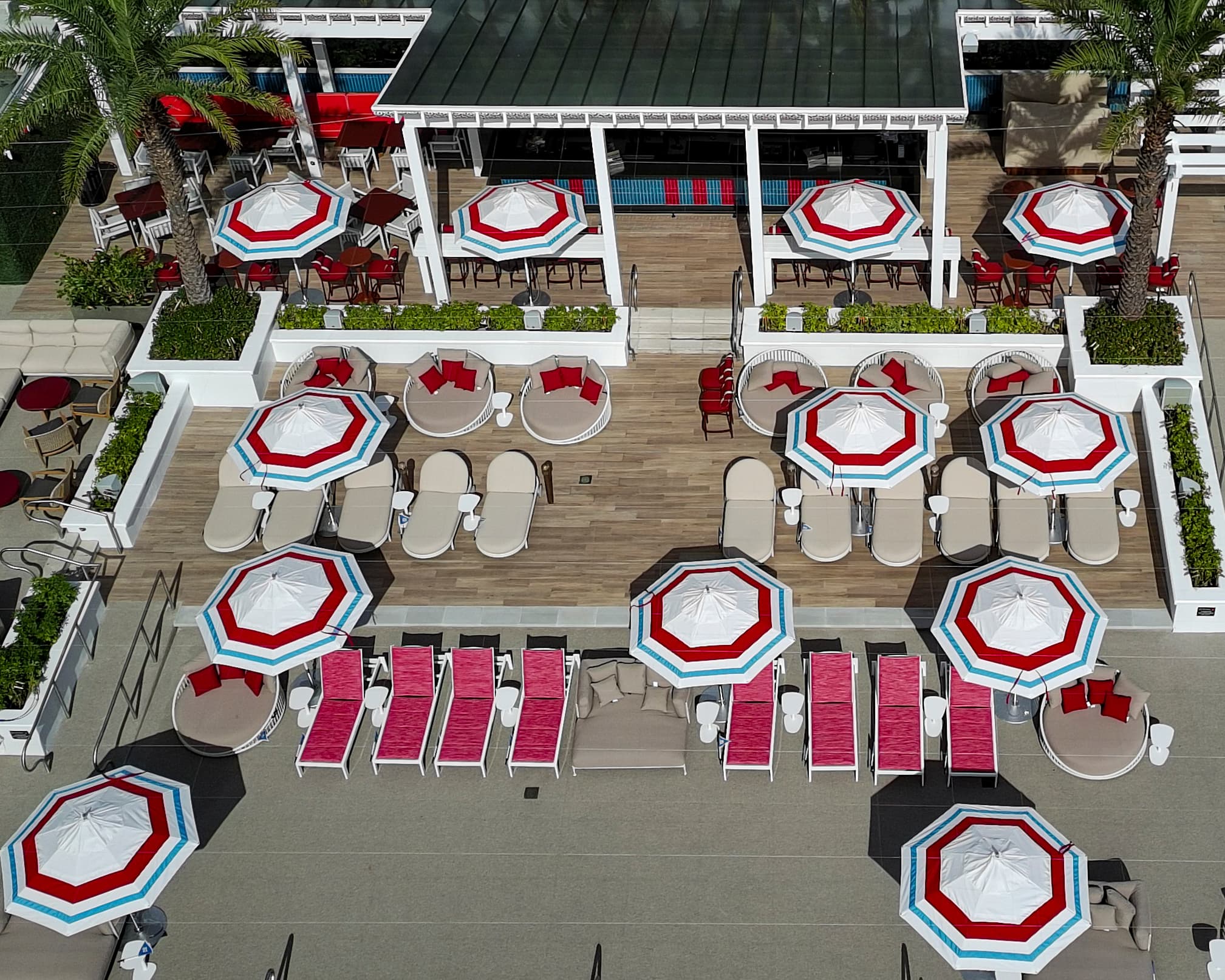
When umbrellas are coordinated—same style, same color palette, same level of upkeep—they reinforce a unified design language across the entire space.
That cohesion elevates everything around it.
On the other hand, when umbrellas vary in style, size, or condition, they can quickly disrupt the visual flow. Even small inconsistencies can make a space feel less refined.
This is especially true in hospitality environments, where guests are constantly absorbing visual cues.
They may not consciously register why one space feels more elevated than another—but visual cohesion is often the reason.
The Details Guests Don’t Notice (But Always Feel)
Some of the most important elements of a great outdoor space are the ones guests never explicitly call out.
- Even, reliable shade coverage
- Umbrellas that feel stable and secure
- Canopies that stay taut and maintain their shape
- Materials that look as good at the end of the season as they did at the beginning
These details don’t draw attention to themselves. But they shape the overall experience in subtle, meaningful ways.
When everything works as it should, the space feels effortless.
When it doesn’t, guests feel it. Even if they can’t quite explain why.
Durability = Consistency of Experience
Outdoor environments are demanding.
Sun, wind, moisture, and constant use all take their toll. And when umbrellas aren’t built to withstand those conditions, it shows—often sooner than expected.
Fading fabric, weakened frames, and frequent replacements create a stop-and-start experience. One month the space looks polished. The next, it feels worn or incomplete.
For hospitality spaces, that inconsistency matters.
Durable umbrellas last longer and help maintain a consistent standard. They ensure that the experience you design is the experience guests continue to have, day after day, season after season.
A More Intentional Approach to Outdoor Shade
The most successful outdoor spaces don’t treat shade as an afterthought.
They approach it as a core part of the design and experience strategy.
That means asking better questions upfront:
- Where will guests naturally want to spend time?
- How can shade support that behavior?
- Does the layout feel cohesive across the entire space?
- Will this still look and perform the same months from now?
When shade is approached with this level of intention, it enhances how the space functions and how it’s remembered.
Shade shapes first impressions. It influences comfort and behavior. It contributes to the visual and emotional experience of a space in ways that are subtle, but significant.
A great place to start is by choosing umbrellas that are designed intentionally and durably: Explore Frankford’s full catalog of umbrellas.